Category Archives: Music Artists

CORIN TUCKER’S ‘1,000 YEARS’

Sidelined and silenced, at least musically, for nearly a half-decade, former Sleater-Kinney comrade Corin Tucker has finally returned, applying newfound Classical maneuvers, richer dramatic emotionality, and a little eccentric percussion to her veritable indie rockist notions on a long-anticipated album that’s sure to please.

But it hasn’t been a truly satisfying sabbatical from music for the iconic ‘riot grrrl’ of yore. Since Olympia, Washington’s most notorious trio amicably departed, she’s been away from her loving husband for long periods of time, making isolation the major topic of interest for the caring mother-of-two.

“I wanted to branch out and do different types of music,” Tucker says while her young children (one born during her former bands’ heyday) fidget in the background. “We did use strings on Hot Rocks (Sleater-Kinney’s artfully deviating ’99 disc). We tried it, but not very much. I’m committed now to different musical styles. But I haven’t toured in four years.”

While Sleater-Kinney’s liberated feministic perspective advanced the strong-willed non-conformist determination empowering less financially and commercially successful riotous foremothers Bikini Kill, Team Dresch and Bratmobile, Tucker’s latest outfit concentrates on inwardly focused themes given curious instrumental abstractions.

Teamed up with veteran Unwound percussionist, Sara Lund, and unjustifiably unheralded Golden Bears bassist, Seth Lorinczi, Corin Tucker Band’s 1,000 Years nobly expands upon the raspy punk-inspired electricity embodying her previous troika.

Although Tucker remains a motherly homebody, her husband, respected movie director Lance Bangs, continues to stay on the road for lengthy periods. This doesn’t please Tucker, especially since the 30-minute HBO-sponsored documentary, The Lazarus Effect (promoting a life-saving antiretroviral medicine), took Bangs to Africa, where the fear of AIDS and criminal activity takes its toll on a spouse anguishing quietly in safer American confines.

With that in mind, many 1,000 Years highlights are full of incessant yearning.

Tucker’s frustration could be heard in her voice as she confides, “Lance interviewed people who needed AIDS treatment, traveling the African continent. You never knew if he’d be ill. I was home with two kids worried. It was sometimes impossible to get a hold of him. So this album was about that time in my life.”

In fact, “Half A World Away” speaks directly about the situation. A proggish number smitten with fleet jungle rhythms and sleigh bells ‘til a more conventional guitar-bass-drum setting unfurls halfway through, it’s full of longing sentiments and frighteningly quivered fervency. Then there’s the separation anxiety imbibing, desolate piano ballad, “Miles Away” (evoking freak-folk starlet Regina Spektor via ‘70s-based laureate Carole King), and eruptive guitar-emblazoned neo-psychedelic treatise, “Big Goodbye.”

Tucker jumps in, “I wrote “Big Goodbye” for the Twilight / New Moon soundtrack. I loved the character and the voice in the book. I took it as a creative writing assignment.”

Another New Moon composition, “1,000 Years,” brings aboard a gothic narrative concerning coming back to life. For Tucker, it felt like a powerful return to form after leaving the music scene for an extended maternity leave. An eloquently commencing title track doused by fuzzy guitar flanging, it’s easy to get into and wholly triumphant.

Make no mistake, Tucker’s latent prog-rock influences (sometimes disseminated from Sleater-Kinney’s final album, ‘05s The Woods) could also be felt firsthand throughout. On contemplative rampage, “Handed Love,” she juggles a few uniquely strewn motifs, as simmering art-rock organ inaugurates the hauntingly bleak Blues-fueled ‘got love if you want it’ banter infiltrating forceful Who-like guitar buzzing to its inevitable burn out.

“That’s very experimental. I tried a bunch of different ideas,” Tucker claims. “Its lyrics involve my friends’ struggling relationships. It’s often so difficult to maintain a connection.”

Musically, her own connection to current band mates, Lund and Lorinczi, couldn’t be any tighter. That’s the reason this newest venture could be positively compared to Tucker’s erstwhile long-time associates.

“Sara’s an amazing talent. She added a lot of bells and percussive elements to the set.”

“Seth’s approach to production was to make each song complete sonically. On the acoustic songs, he worked on my guitars to let it sound complete. And he wrote and arranged the string parts. I think there’s some guitar stuff that’ll take you to another place. But part of what you do in your musical past always fills out your next project. You’re always trying to build on that.”

Inevitably, there are a few instances that graciously recall Sleater-Kinney’s best restive tunes. Fiery love-struck wrangler, “Doubt,” retains the same shrieking yelps, sultry pleading and screaming six-string fury of yesteryear. Utilizing the famous soft-loud catch-and-release approach nearby Seattle grunge bands once touted, this unguarded ‘stress track’ hammers away at the brain before completely dropping out, then re-emerging with a murky organ groove underpinning an oncoming train wreck that brings it all back home.

Less indicative of past forays, one more fast-slow changeup, “It’s Always Summer,” begs for reconciliation as Tucker pines for her distant lover stuck inside a delirious Third World nation. Approximating, acoustical Appalachian folk, Tucker’s desirous lamentation nearly slips into Quarterflash’s compelling ‘80s scorcher “Suddenly Last Summer” until Classical strings darken the mood for an understated heavenly choral swoon.

“That song happened naturally on acoustic guitar. It took on its own personality. Seth’s standup bass was then brought in,” Tucker lets on.

In similar fashion, soft-toned ballad “Dragon” drifts by eerily, contrasting sensitive orchestral poignancy with slowly bashed cymbals and toms. Notwithstanding the abrasive electric guitar, bedraggling elegantly strummed mood-scape, “Pulling Pieces,” its misty flourishes waver through downcast verses numbingly quavering ‘I’m just a shadow of what I used to be.’ These sullen moments of ravaged aloneness make Tucker’s solo plight a slight departure from her ‘riot grrrl’ past. Being a mother of two with a husband can’t be easy and it’s certainly different than being a semi-famous ‘90s rock star.

But she lets it all hang out on manic depressant refutation, “Riley,” where her rhythmic guitar willfully breaks into “So You Want To Be A Rock And Roll Star.”

“I love the Byrds. Patti Smith’s version is an all-time favorite of mine,” Tucker insists. “Seth and I are also both big fans of ‘70s music. And we’ve been playing music 20 years so these songs touch on our relationship with music.”

Not surprisingly then, Tucker’s piano strolls into “Rock And Roll Star” one more time during the tear-dropped timidity of “Thrift Store Clothes.”

Undeniably, Tucker’s exalted indie rock status secures her past and commands her future. But now she’s not afraid to reach further back to earlier torchbearers for fresh inspiration, even though she’s in her mid-thirties now. A few obvious influences, some being very respectable independent women, get mentioned before she has to hang up the phone and attend to the kids.

“I grew up in a household that had music playing all the time. My dad had amazing taste. We listened to the Rolling Stones and Bob Dylan,” she remembers. “When I was 10, I got into Chrissie Hynde (of the Pretenders) and Joan Jett. And I loved Patti Smith. All these women had a toughness and presentation that was all about the music. It’s like, ‘Look out. Here I come.’ They demanded attention in a serious way. It wasn’t about being a starlet.”

Words of wisdom, indeed. Especially when reiterated more than 1,000 days, if not 1,000 Years, after Tucker took time off to raise a family following the resounding decade-long success of a seminal female trio still receiving idol praise and recognition. There’s no rust on this lady.
BELLE & SEBASTIAN BIOGRAPHY – ‘Dear Catastrophe Waitress’

BELLE & SEBASTIAN BIOGRAPHY
“Dear Catastrophe Waitress”
(Rough Trade)

In the early ‘70s, detached rock heavyweights Led Zeppelin, Pink Floyd, and Steely Dan distanced themselves from their rabid minions by advantageously shunning interviews to garner larger-than-life mystique.

Though these rock figureheads went on to sell massive records and get rich, less determined Scottish underground pop mavericks Belle & Sebastian retain a smaller avid fan base earning far less money eschewing drooling press darlings.
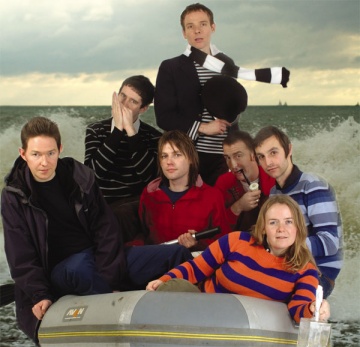
Resisting the temptation of tabloid exposure, modest church janitor Stuart Murdoch may still be performing menial labor tasks while piloting the immensely evasive Belle & Sebastian.

A brilliant lyrical manipulator constructing remarkably pleasant low key tunes, Murdoch avoids the subversively camp, sugary twee-pop trappings epitomizing former fey fossils Pooh Sticks, Heavenly, and Jellyfish by using better lyrical imagery chiseled from a cynically mature perspective. Especially on early recordings, the ex-choirboy’s cautious, lisped Scottish accent – a chipper chestnut chirp – courted comparisons to ‘60s hippie Donovan’s fragile tenor wisp.
Perfecting deviously abstruse Beatles-Beach Boys songcraft, Belle & Sebastian managed to retain a healthy cult status ‘70s lost legends Big Star would appreciate. At their most tranquil, the resolute Glaswegians offered beautifully melancholic serenades of yearning vulnerability, nearly paralleling deceased folk icon Nick Drake’s brittle solemnity and pristine brilliance.
Countering the slash and burn of pre-existing shoegazer-grunge scavengers, Murdoch’s exhaustive emotional encounters and breathtakingly enthusiastic pronouncements were completely revelatory to nerdy teenage homebodies, attentive post-adolescent dames, and lonely abstinent collegiate conservatives wearily thirsting for canonical consultation post-Nirvana. Through his impressively pensive panoply of pastoral epiphanies and bucolic metaphors, the bashful, well-scrubbed shy boy effortlessly ushered in universal themes with an alluringly noir provocation as polished as the encrusted lush instrumental veneer partnered mainstays Stuart David, Stevie Jackson, and Isobel Campbell sustain.
Debuting overseas with ‘96s promising soft folk invocation Tigermilk (belatedly released three years hence in America), Belle & Sebastian sprinkled sympathetic piano and delicately jangled acoustics atop Murdoch’s understated articulations of precarious timidity and shaken insecurities. They haven’t yet rediscovered the melodically tidy insouciance offered on “She’s Losing It,” or, despite contrary verbiage, the mellifluent lullaby “I Don’t Love Anyone.” On the punchy guitar-etched verses of the infectious hand-clapped ‘kiss on the cheek,’ “You’re Just A Baby,” memories of the aforementioned Big Star dance in the brain.

Overlaid by joyous flute, the tuneful piano reclamation “We Rule The School” revisits youthful observances with balladic splendor. Rejoicing over vanquished celibacy, “My Wandering Days Are Over” announces its victorious outcome with triumphant trumpets. “Expectations” connects its neo-orchestral spaghetti Western theme to Tijuana mariachi in a deliriously complex climactic manner as Murdoch’s childlike falsetto squeals the decisive ‘top of the world’ reprisal. Selling approximately 1,000 copies independently, Tigermilk became a wildly high-prized collectable prior to Matador Records’ U.S. distribution.
Murdoch’s exquisite songwriting and honeyed larynx may have peaked on Belle & Sebastian’s indelible worldwide debut, If You’re Feeling Sinister, an intimate homespun masterpiece distinctively delivering tender reflections with calm precision, subdued concision, and preppy prim. Like a prolonged kiss on a worthy first date, its cresting hook lines and swirling ebb tides navigate a young girl’s heart. Ably penning expressive stanzas that initially hold back vital information, Murdoch lets stories unfold piecemeal, allowing unexpected vexing text to circumvent ideal outcomes.
Singing in a daintily femme tone, the casually swaying opener “The Stars Of Track And Field” connects Sinister to Tigermilk’s finale, the debonair buttercup, “Mary Jo,” and its own coy closer, the sentimental dreamscape “Judy And The Dream Of Horses.” Seductive organ now commonly informs the artful dodgers’ expansive colourfield as spiffy horns receive better prominence amongst the pushed-forward acoustic embellishments.
‘Passive’ and ‘cuddly’ are two descriptive words not only inscribed on the suave redemption “Seeing Other People,” but also representative of the entire Belle & Sebastian canon.

On the lilting title track, children play in the background as consolable Catholic convolutions caress carefree pianissimo. Delving deeper into social situations, a train whistle summons the caustic “Me And The Major,” which confronts the unwieldy generation gap separating two rail-bound passengers. Danger awaits an unsuspecting gal in the stalking “Like Dylan in The Movies,” which takes the alluded iconic singer-songwriter to task by whimsically referencing his circuitous Don’t Look Back documentary.

‘98s admirable The Boy With the Arab Strap may be a tad short on originality and fresh ideas, but the symphonic beguilement “Dirty Dream #2” and the Country-quilted “Simple Things” relish in the dazzling serendipitous wonderment of yore. Although the neo-Classical “Chick Factor” stumbles over some obvious psychedelic Left Banke chords, it gets thumbs up. So does the glossy soul confection “The Boy With The Arab Strap” (by definition: a subjugating penile appendage).

But the tear-stained tranquilizer “Seymour Stein” (an unlikely ode to the Sire Records magnate) and the ponderous prog-rock misstep “Spaceboy Dream” fall short of expectation. Analogously, the contemplative “Sleep The Clock Around” reviews the falling fortunes of a promising lass.
Despite rumors concerning Belle & Sebastian’s forthcoming demise, breakup, or retirement, ‘00s shimmering Fold Your Hands Child, You Walk Like A Peasant kept the church candles burning. The stately harpsichord-laden confessional “The Model” illuminates brightly against the stark “Beyond The Sunrise,” which surprisingly features Stevie Jackson’s deep baritone and newest member Sarah Martin’s velvety contralto. Martin also handles the affable lunar reconciliation “Waiting For The Moon To Rise.”

But it’s the Murdoch-sung retro-soul maneuver, “Don’t Leave The Light On Baby,” that truly hits home in a sullen manner dark luminaries Lambchop and Tindersticks comprehend. The song title “Nice Day For A Sulk” summarizes the oft-times overcast mood.
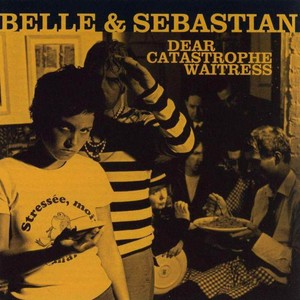
Unexpectedly, the Glasgow troupe handed the reigns to overzealous producer Trevor Horn (ABC/ Frankie Goes To Hollywood) for ‘03s multifarious comeback, Dear Catastophe Waitress, which coincided with their longest US tour (a mere 15 dates). Though it’s doubtful any divergent paths chosen lead down blind alleys, a sense of lost innocence and indecisiveness account for slight alterations. Whereas past recordings hid imaginative borrowings, such is no longer the case.


Yet Murdoch’s tricky lyrical juxtaposition between guarded optimism and despairing disillusionment remained unfettered.
There are some winning moments, indeed. The challenging suite, “Step Into My Office Baby,” intertwines loopy horn flutters, chuggin’ guitar-drum beats, Carnaby Street pop, and billowy Beach Boys harmonies into a festive exhortation discerning fans will be rapturously caught off-guard approving.
Just as unanticipated, the ensuing “Dear Catastrophe Waitress” maintains the same expeditious tempo, gaining resilience from its chopped-up titular refrain and tossing in muted trumpet and xylophone amongst crashing orchestration. Singing more assuredly than ever, Murdoch’s excitable tenor wondrously climbs above the Gospel-licked organ grazing the gleeful “If She Wants Me.”
However, the seams begin to show as stylistic fodder conveniently concealed in the corridor on previous long-players now affects Belle & Sebastian’s majestic grandeur first-hand. The cheeky Anglo-folk strummer, “Piazza, New York Catcher,” dangles the baseball superstar’s sexuality across a love tryst while the Left Banke’s dour hit single, “Walk Away Renee,” gets used as an ironic epitaph (further enforcing that ‘60s band’s minor influence). The vindictive snickering snipe “You Don’t Send Me” snubs a bygone ‘darling’ by inverting Sam Cooke’s nifty love classic and familiar Thin Lizzy guitar riffs saddle the horn-soaked “I’m A Cuckoo.”

Nonetheless, the extended sextet sail home smoothly on the seaworthy private school remembrance “Lord Anthony” and the funky faux-Jazz fling “Roy Walker.” The latter benefits from newfound clustered choral chanting, barroom blues guitar vamps, and a “Highway 61” kazoo signature. “Stay Loose,” a salient new wave/ garage-meshed organ droner, ends the variegated disc on an encouraging note.
Continually elusive, Murdoch, to my knowledge, has only granted one Waitress interview thus far – for satirical bastions The Onion. He remains a reluctant avatar a la greater known ex-Pink Floyd acid casualty Syd Barrett and brain-damaged original Fleetwood Mac guitarist Peter Green. Let’s hope he doesn’t suffer their enigmatic fate.